


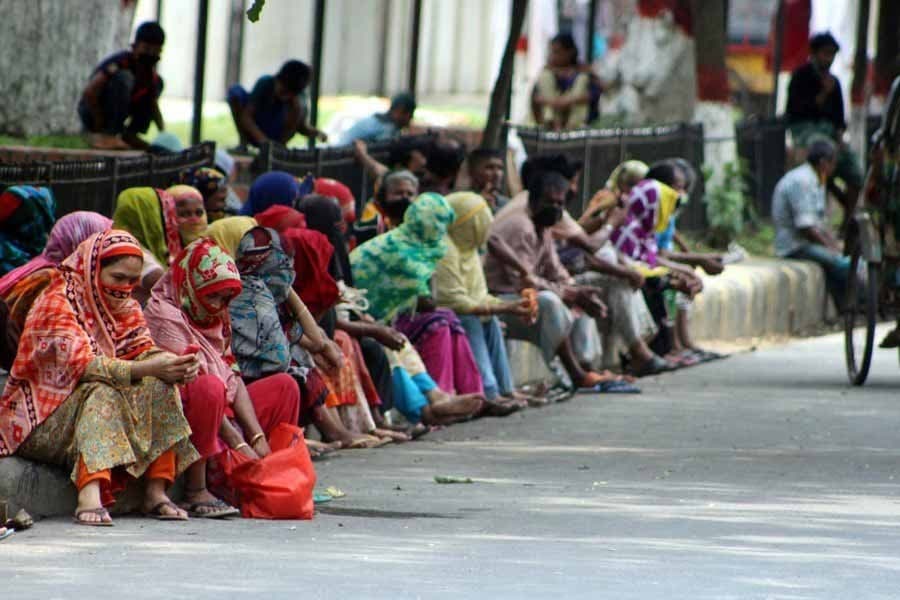
Only 32.9 per cent of Bangladesh's population is fully food secure in terms of daily intake, with millions facing vulnerability in their everyday nutrition, according to a new survey by the Bangladesh Bureau of Statistics (BBS).


The survey, titled "Food Security Situation and Coping Mechanism in Bangladesh", released on Monday, found that 44.57 per cent of the population is marginally food secure, meaning their daily food supply is fragile and could deteriorate at any time.
Rural communities are particularly at risk. While 20.94 per cent of urban residents face moderate to severe food insecurity, the figure rises to 25.75 per cent in rural areas, the survey revealed.
On average, 22.54 per cent of the population nationwide struggles with food insecurity, with the northern and north-eastern districts most affected.
Among divisions, Rajshahi is the hardest hit, with 32.81 per cent of residents experiencing moderate to severe food insecurity and 44.25 per cent marginally food secure. Mymensingh follows closely, with 32.62 per cent vulnerable in daily food intake, while in Rangpur, 31.58 per cent of the population is moderately to severely food insecure and 46.37 per cent marginally secure.
The BBS report highlighted a strong link between food insecurity and household income. Families in the lowest two expenditure deciles -- living below the upper poverty line -- rarely achieve food security, with severe insecurity concentrated among the poorest. In contrast, food security improves steadily among higher-income households.
Regional disparities are also pronounced. Northern divisions, including Rajshahi, Rangpur, Mymensingh, and Sylhet, report the highest levels of food insecurity, often forcing households to resort to negative coping mechanisms, the survey noted.
The findings underscore the ongoing challenge of ensuring adequate food access, particularly for rural and low-income populations. Experts suggest that policymakers focus on income support, targeted food programmes, and regional interventions to reduce household vulnerability and improve national food security.